

What is Scrum?
Scrum is a popular Agile framework that helps teams work in short cycles, adapt to change quickly, and deliver value continuously. It is designed to improve collaboration, transparency, and progress across complex projects.
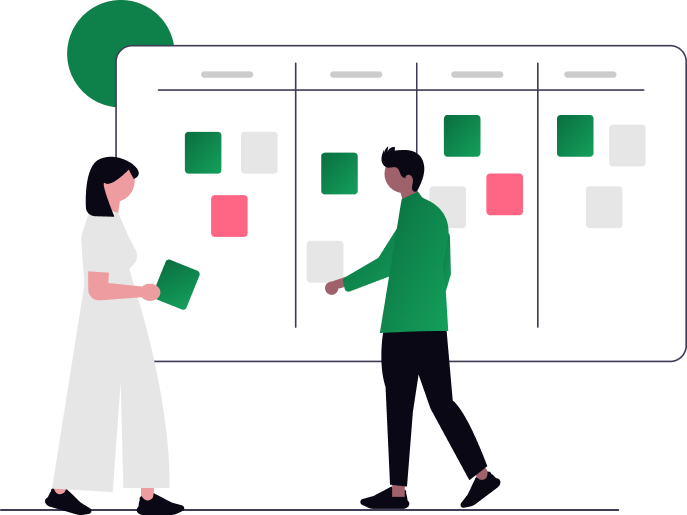
Scrum in brief
Scrum helps teams break large or uncertain work into smaller, manageable increments. Rather than waiting until the end of a project to deliver results, Scrum encourages teams to plan, build, review, and improve continuously.

Why Teams Use Scrum
Modern projects often involve evolving requirements, shifting priorities, and the need for faster delivery. Scrum provides a practical way to respond to these realities while keeping teams aligned around business value.

What Makes Scrum Different
Instead of relying only on detailed upfront plans, Scrum uses iterative decision-making. Teams focus on the highest-priority work first, inspect progress frequently, and adjust based on stakeholder feedback.
Three ideas How Scrum works
Scrum is simple in structure, but powerful in practice. Its effectiveness comes from a few core ideas that shape how teams work together.

Iterative delivery
Work is completed in short cycles called Sprints, allowing teams to deliver usable increments regularly instead of waiting for one final release.
Cross-functional teams
Scrum teams are empowered and self-organizing. They bring together the skills needed to move work from idea to delivery.

Inspect and adapt
Scrum encourages frequent review of progress, stakeholder feedback, and continuous improvement so teams can adjust quickly.
How Scrum works
SCRUMstudy describes Scrum as a framework built around short, focused work cycles and regular collaboration. A typical flow looks like this.

Vision and priorities
Project goals are clarified and key requirements are organized into a prioritized product backlog.

Sprint planning
The team selects high-priority backlog items and agrees on the work to complete during the Sprint.

Sprint execution
The team works collaboratively during the Sprint to create a potentially shippable increment.

Daily review
Short daily meetings keep everyone aligned on progress, priorities, and impediments.

Review and improve
At the end of the Sprint, the team reviews deliverables, gathers feedback, and identifies improvements.
Online Proctored Exams
Take exams from home, globally
Key Scrum roles
Scrum defines clear responsibilities to support focus, alignment, and delivery.

Product Owner
Value and priorities
Manages the product backlog and helps ensure the team works on the most valuable items first.

Scrum Master
Process and facilitation
Supports the team in applying Scrum effectively, removes impediments, and promotes continuous improvement.

Scrum Team
Delivery
Collaborates to complete Sprint work and build product increments that meet agreed requirements.
Why Scrum matters for modern teams
Scrum is widely used because it balances speed, structure, and adaptability. It helps organizations move forward even when project uncertainty is high.
- Faster delivery of important features
- Better visibility into progress and priorities
- Earlier feedback from stakeholders and customers
- Reduced risk of building the wrong thing
- Clear structure for planning and collaboration
- Shorter cycles that improve focus and accountability
- Regular opportunities to learn and improve
- More ownership through self-organizing work
Learn Scrum with PMstudy
PMstudy helps professionals build a clear understanding of Scrum and prepare to apply it confidently in real projects. Whether you are new to Scrum or building toward certification, structured training can help you move faster.

Clear foundation
Understand Scrum concepts, terminology, roles, events, and artifacts through structured learning.
Practical perspective
See how Scrum is applied across project and product environments, not just as theory.

Certification pathway
Progress from fundamentals to advanced learning with training aligned to recognized Scrum certifications.
Ready to explore Scrum further?
Use this page as the starting point for your Why Scrum section, then guide learners into topics such as Scrum in 6 Minutes, Scrum Principles, Scrum Aspects, Scrum Phases and Processes, and Scrum certifications.